
I had the opportunity earlier this year to experience my first via ferrata while visiting family in France. Via ferrata means “Iron Path” in Italian. This can be traced back to World War I, when Italian and Austro-Hungarian soldiers built similar routes through the Dolomites to move troops across the mountains.
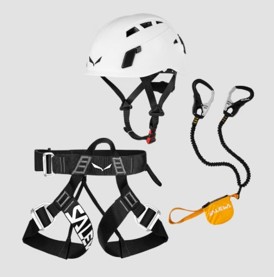
It was an exhilarating experience. A via ferrata is basically rock climbing with additional levels of safety. Specialized equipment is used including International Climbing and Mountaineering Federation (UIAA) certified climbing helmets, harnesses and via ferrata-specific lanyards. The double lanyard has two main cords with carabiners, a shock cord that will deploy if you fall and a short arm with a carabiner to hook onto a rung if you want to rest or take photos.
Utah’s First Via Ferrata
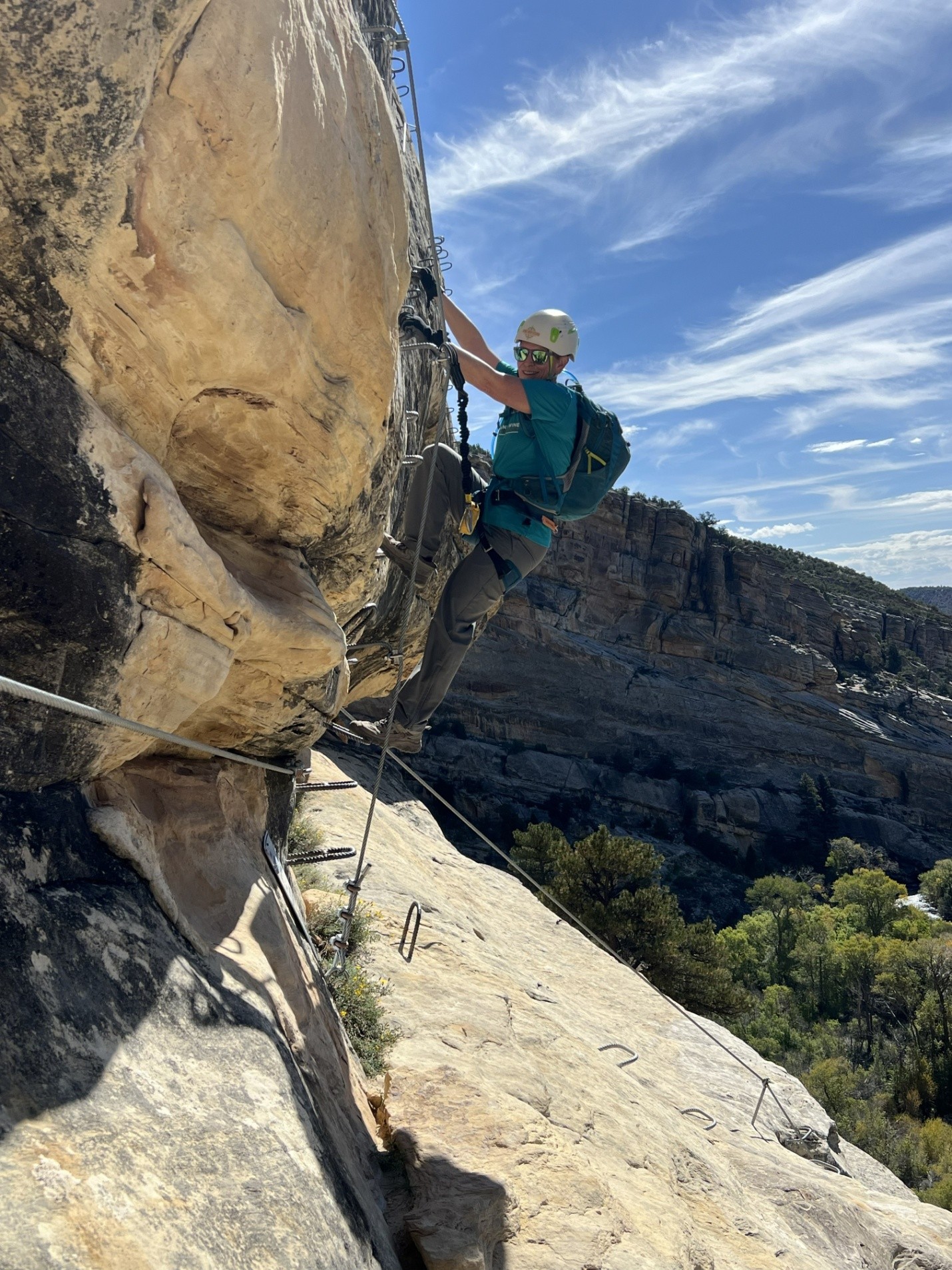
When I got home and told my friends about it, someone mentioned that there was a new via ferrata just about 20 minutes outside Vernal. It is Utah’s first public via ferrata and the longest one in the US! The courses use a fixed steel rope line along with rebar rungs and steps bolted into the rock. The Ashley Gorge via ferrata includes more than 5,000 feet of installed steel cable, over 900 vertical feet of climbing, a sky bridge, and a sky ladder.
The Ashley Gorge via ferrata opened in August of 2025. It is not without controversy as it is directly adjacent/above Ashley Spring, which provides the city of Vernal with most of its drinking water. Protecting Ashley Spring is the first priority, and Uintah County has been working with Ashley Valley Water & Sewer to create solutions that allow for public access and keep the drinking water safe. It is imperative that we are good stewards and do not do anything that may adversely affect the water source. That means bringing a Wag Bag to contain solid waste and picking up all litter!
None of the Ashley Gorge via ferrata was funded by local taxpayers. The nonprofit Access Utah Foundation received roughly $800,000 in state funding in 2022 to build a public via ferrata, then partnered with Uintah County Economic Development to settle on the Ashley Gorge site, with additional backing from the Utah Outdoor Recreation Grant, according to information published by Ashley Gorge Via Ferrata. Uintah County leaders viewed the course as a potential tourism draw from the start, and the foundation says its mission is to open up new outdoor opportunities across Utah.
Doing the Ashley Gorge Via Ferrata
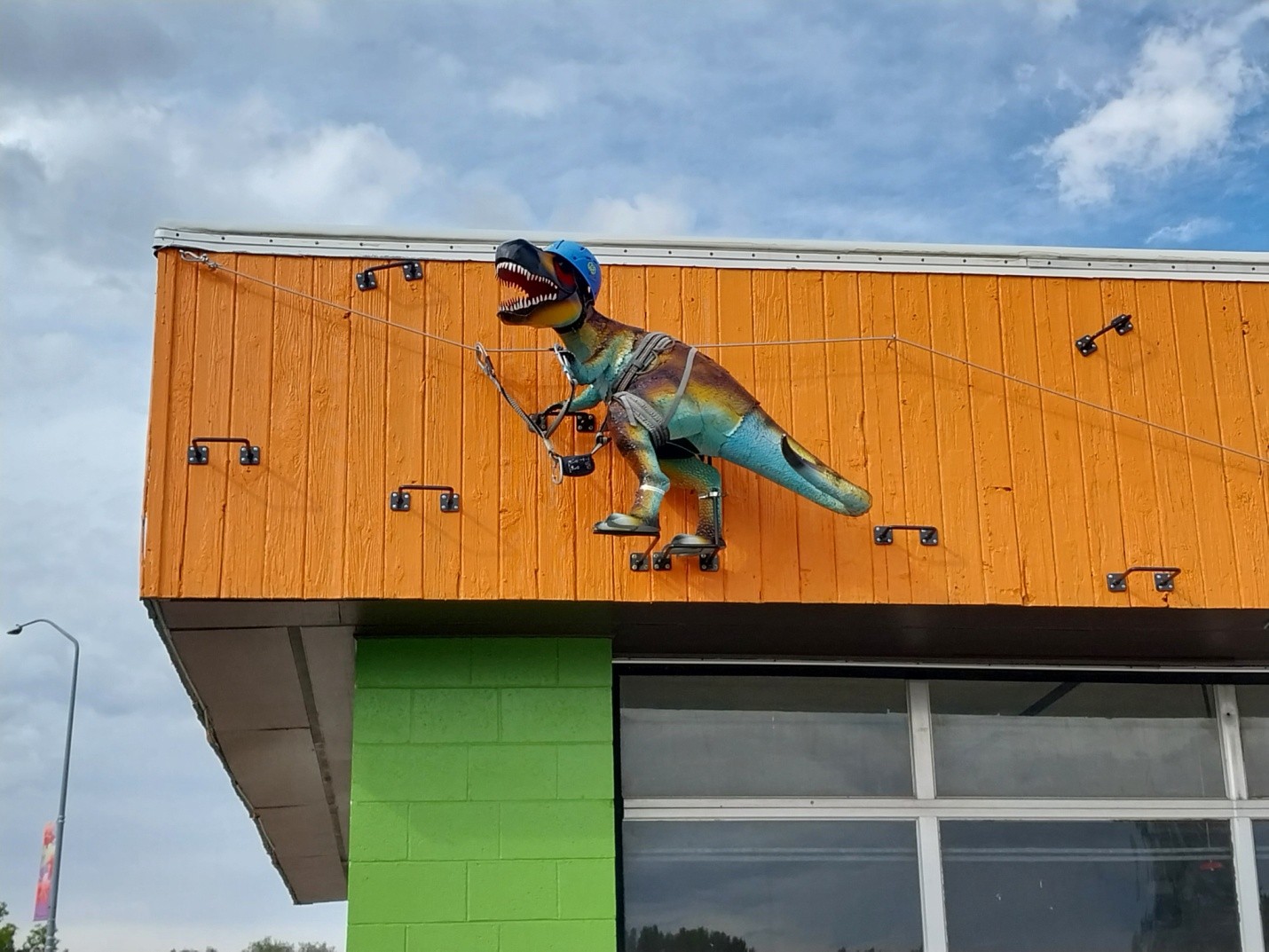
A friend and I went online and found that Dyno Outfitters is the main point of contact for the Ashley Gorge via ferrata. They rent all the necessary gear, provide maps, have a small gear shop, and give you all the route details. They also have guides that will take you and your friends or family on part- and full-day trips.
We went ahead and reserved our gear online, signed the required waivers (one for the gear through Dyno Outfitters and the second which is a mandatory Uintah County waiver required for all climbers). To rent the full set-up, it was $45 plus tax per person. There is no fee to access the via ferrata, and we decided to go without a guide.
Once we arrived in town, we had our gear fitted to us and then headed out to the course. It is about 20 minutes north of Vernal. Once we got there, we were approached by two Uintah County employees checking that everyone had the correct safety gear. There is a Port-A-Potty at the trailhead, but bring your own toilet paper – it was totally out when we used it. UGH! There are no restroom facilities on the course.
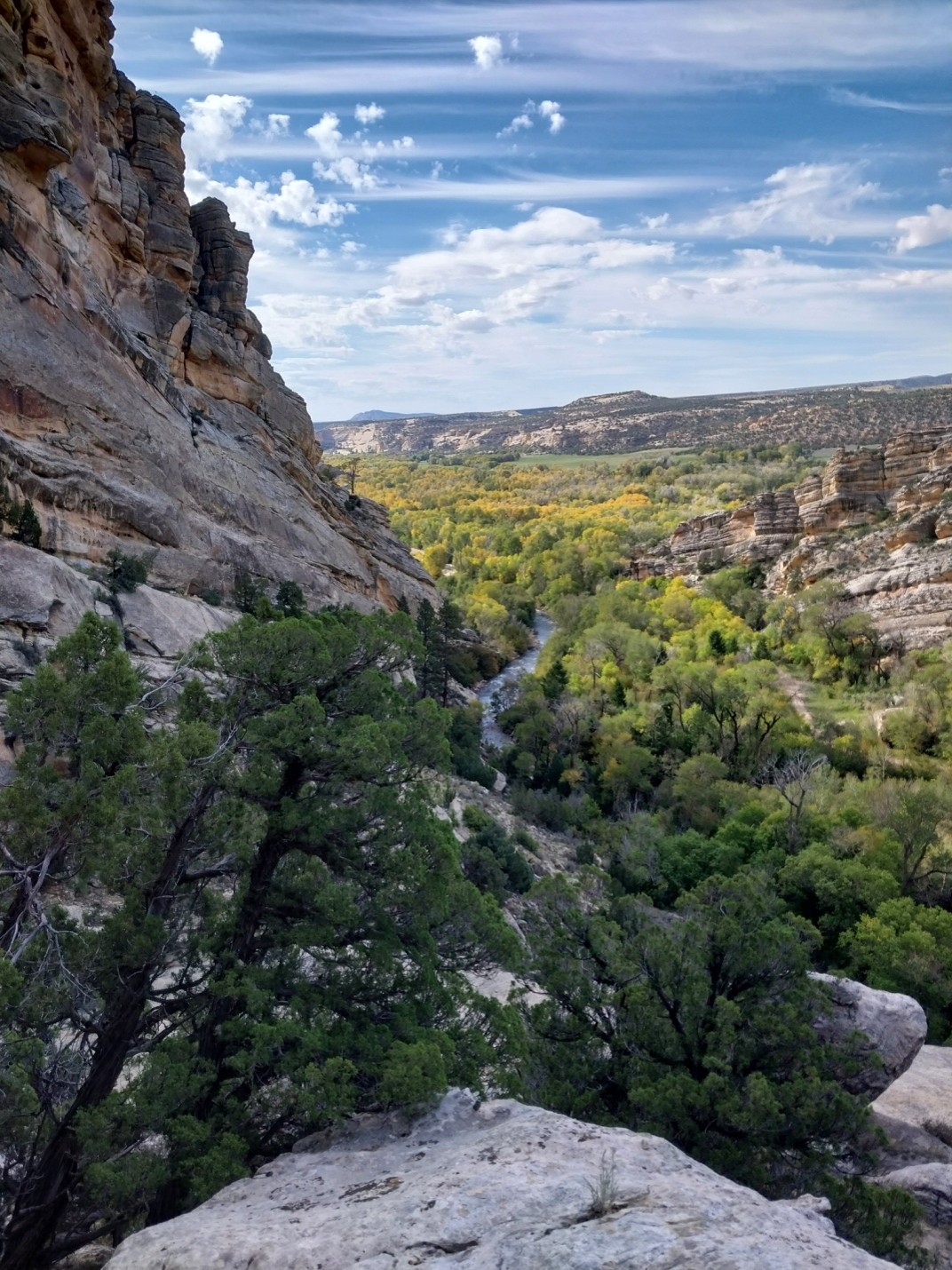
View From the start of the course back towards the parking lot
We headed up the 0.75-mile access trail and our adventure began. It was a Sunday morning around 9:30am with slightly overcast skies. The trees down the gorge were starting to turn color and were absolutely breathtaking! We had a few jitters as we hooked in and ascended onto the trail.
Although the parking lot was crowded, we didn’t see too many folks. Eventually, we did have a couple occasions where we had to hold back a bit as we waited for slower climbers to proceed.
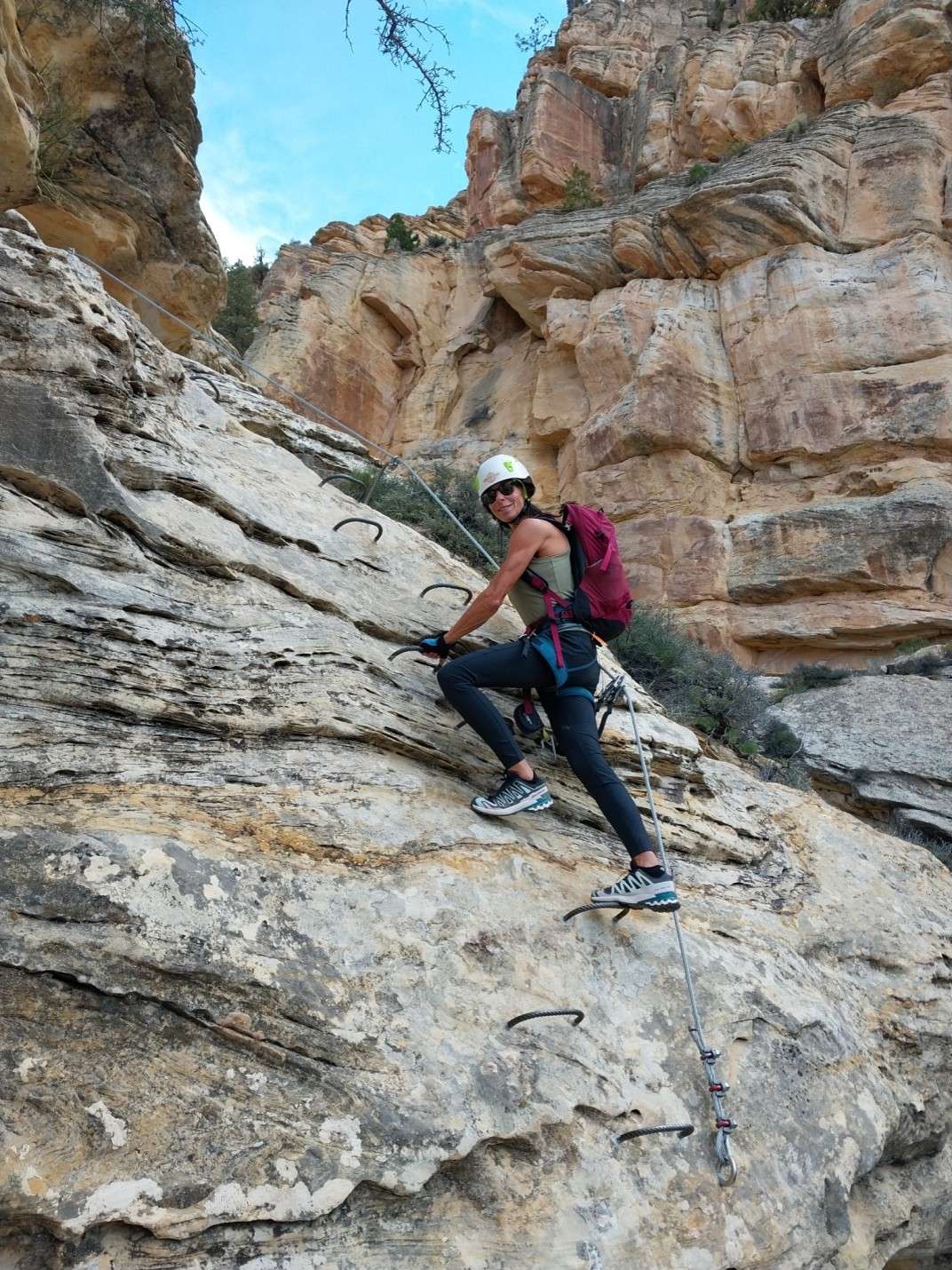
Carolyn B starting the course
We ended up with 6 miles on the tracker and about 6 hours total time on the course. We stopped many times for breaks, photo ops, etc. All in all it was a great workout, and our arms and hamstrings were a little sore the next day!
We did the trails numbered 1 – 8 and left the newest section called (appropriately) “Jur-Ass-Kicked” for another time. This is the biggest wall in the gorge and the hardest sustained climbing on the route. It has roughly 700 feet of steep, highly exposed terrain. It is rated 4B – 4C and just that section takes 2 – 3 hours!
10 Tips on Completing the Ashley Gorge Via Feratta
If doing the Ashley Gorge via ferrata sounds like a challenge your interested in tackling, here are some things to consider before signing up.
1. Go early or go on weekdays.
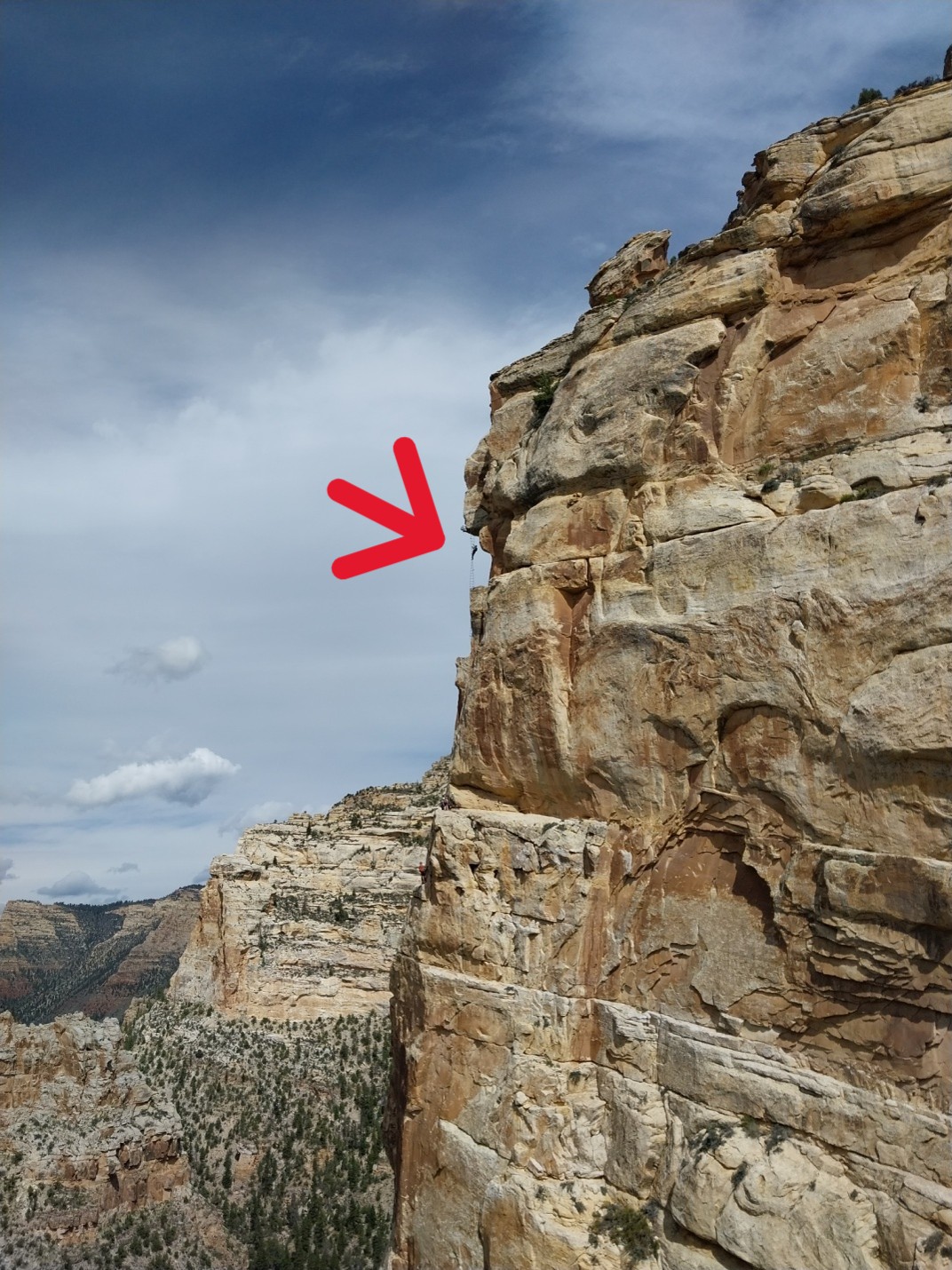
The Ashley Gorge via ferrata gets super crowded on weekends. If you can do weekdays or arrive early in the morning, you can typically move through the course easily. One of the Dyno Outfitter guides told us that they had to sit and wait for an hour to access the Helix Ladder section of Jur-Ass-Kicked the previous Saturday ! (About the middle of this photo, you can see a climber hanging on the Helix Ladder!)
2. Know your ability level . . . and your fear of heights.
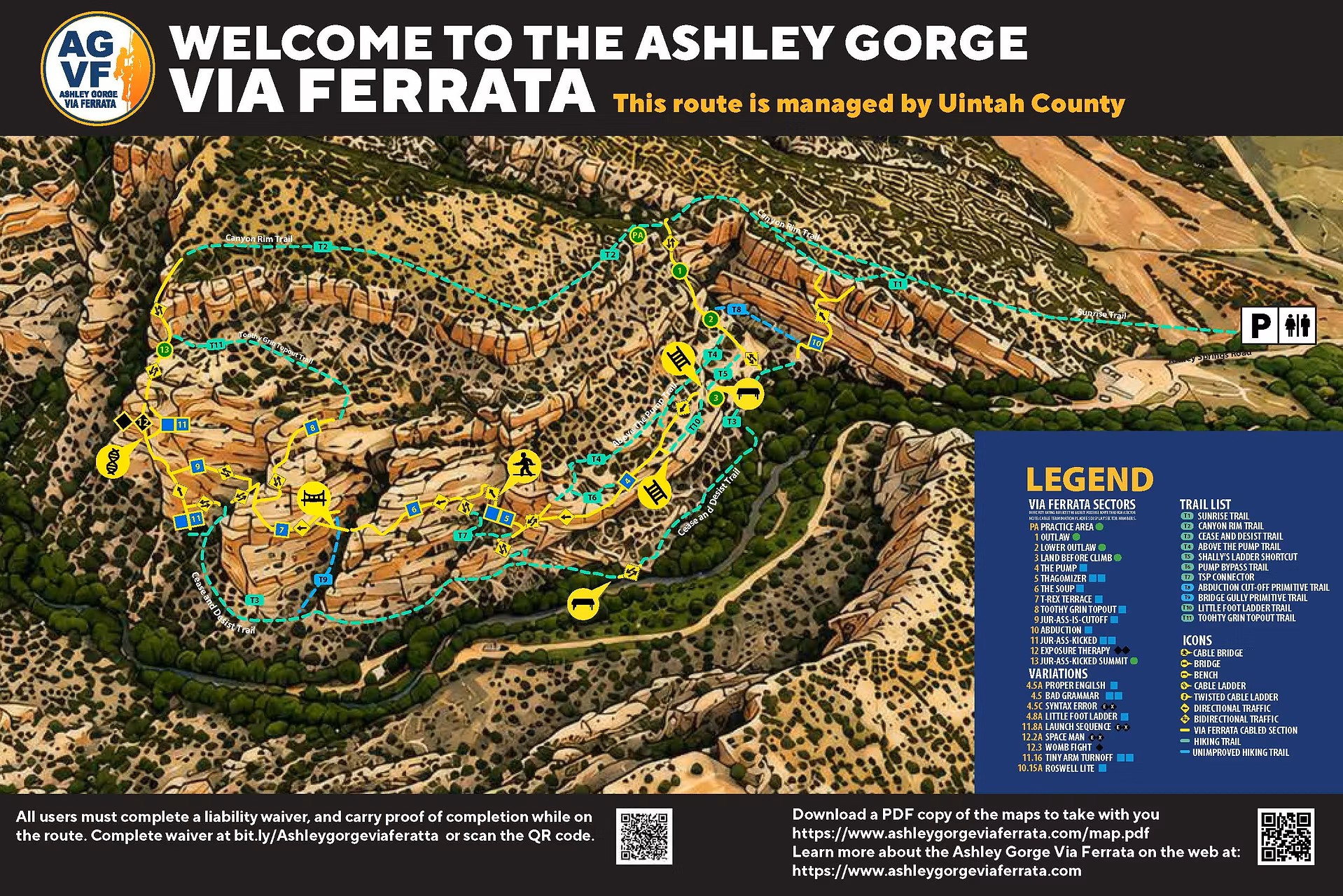
There are several trails that are designated as “bail out” routes in case you just aren’t able to finish the course. Keep an eye on the maps for these.
Be aware that the routes are usually designated as one direction. Make sure you know your ability because you may not be able to backtrack if you decide that the required skill level is too high. There are trail rating signs on the many trail markers. Trails and routes are designated using the Fletcher/Smith system 1 (easiest) to 5 (hardest.) The routes at Ashley Gorge range from 2B to 4C. We stuck to the intermediate-rated 2 to 3 routes this time.
Anticipate 2 – 12 hours, depending on the routes you choose, and 3 – 6 miles total of walking/moving. To get to the route, there is a very steep/rocky incline that you need to climb up. It is about 0.75 miles. Bring plenty of water and snacks, as well as sunscreen.
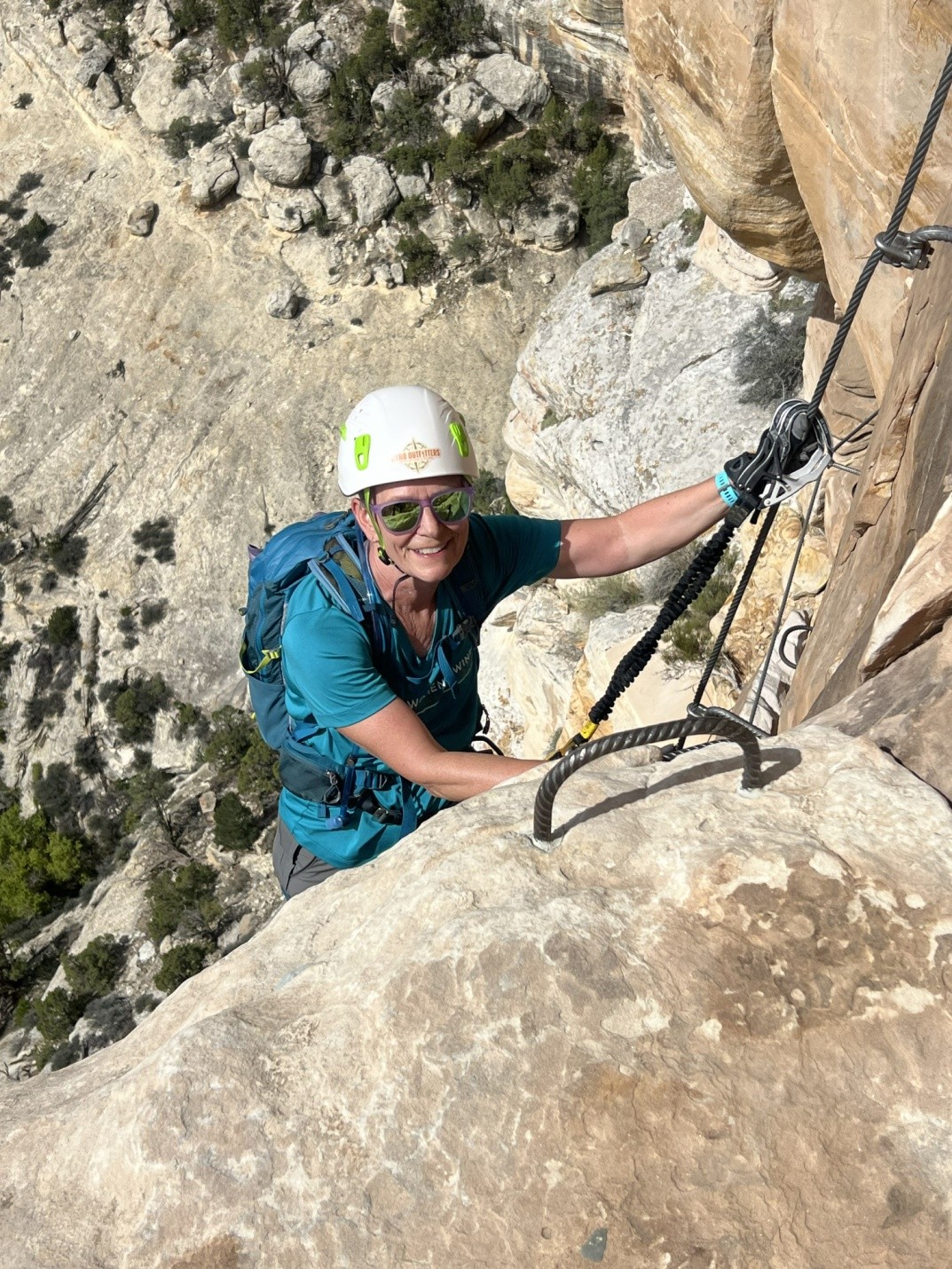
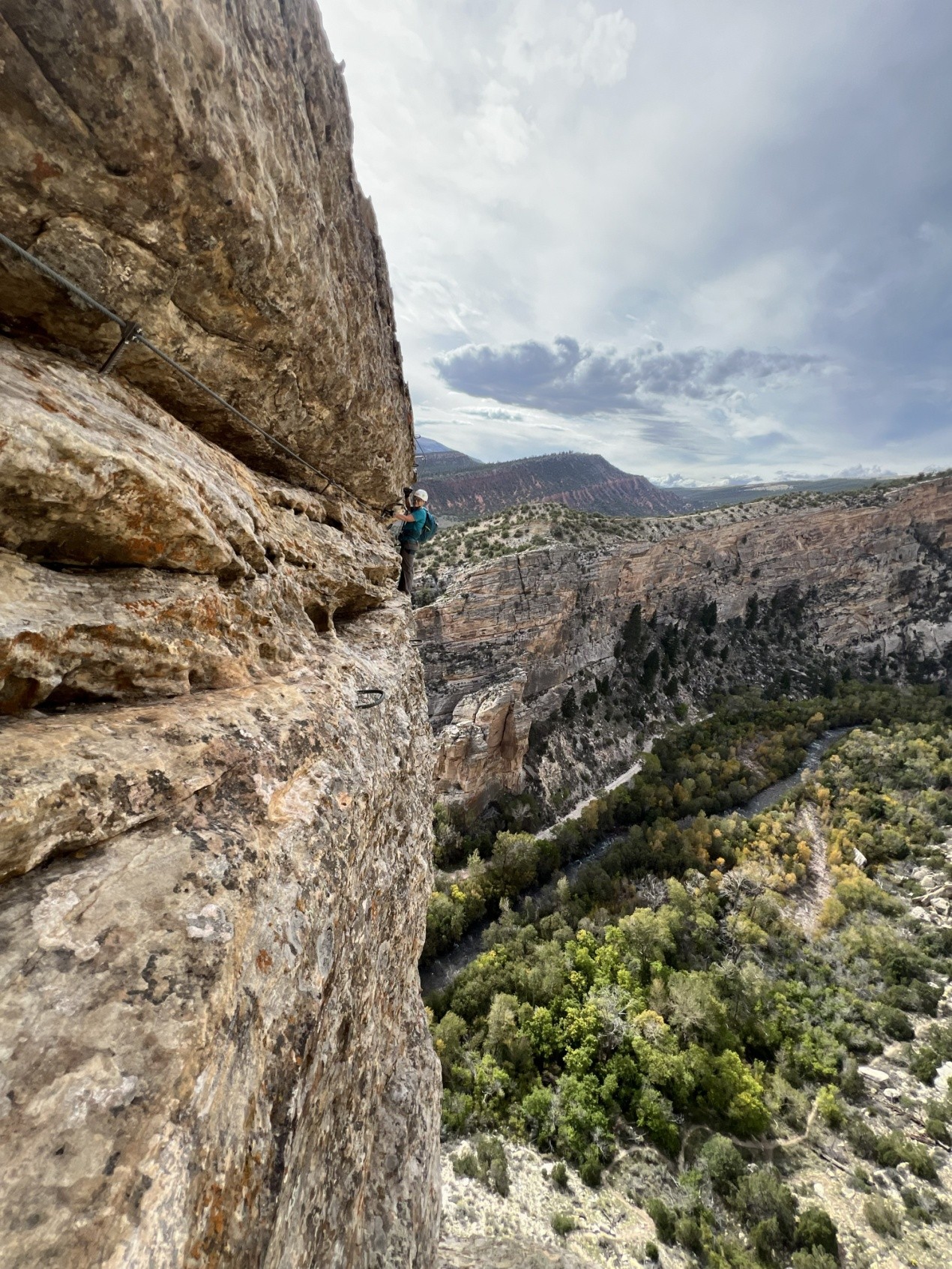
3. Wear sturdy, grippy shoes.
As you are standing on rebar rungs or cables or walking on rocky ground all day, I would NOT recommend wearing light trail runners, rock climbing shoes, or anything like that. Give your feet a break and wear a sturdy shoe, at least one with good cushioning on the bottom and a grippy sole. I wore a low-top hiking boot.
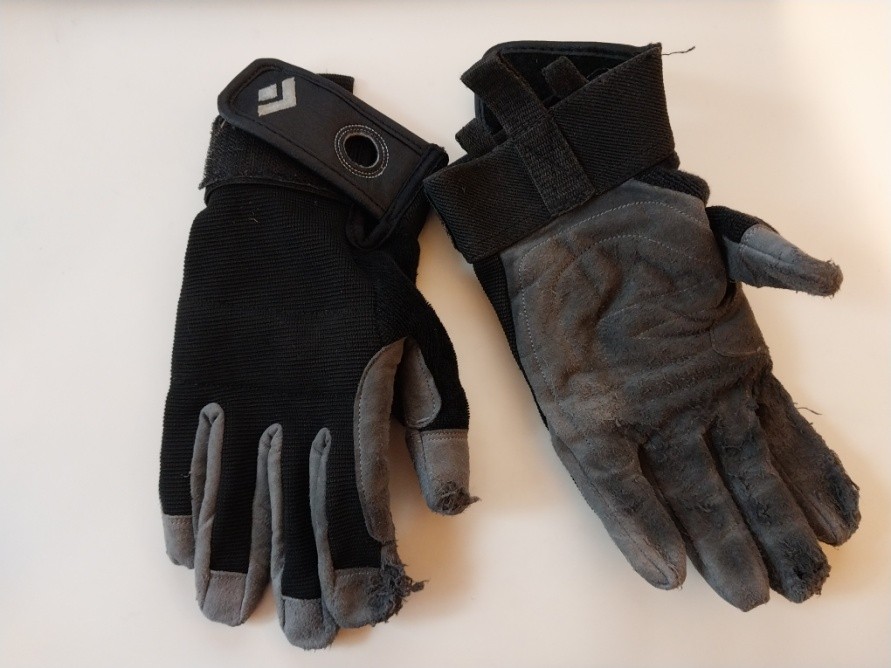
4. Bring a good pair of gloves with leather palms.
You’ll grab rungs and rocks or will run your hands on the cable constantly. All of that can really abrade your palms. I wore Black Diamond “Crag Gloves.”
5. Bring a Wag Bag, extra toilet paper (in case they are out at the trailhead), a light jacket/rain jacket, sunglasses, etc – basically an abbreviated 10 Essentials!
6. Sign the waivers online ahead of time and study the maps ahead of time.
7. Plug in “Ashley Gorge Via Ferrata” using Google Maps. Apple Maps will not get you to the trailhead.
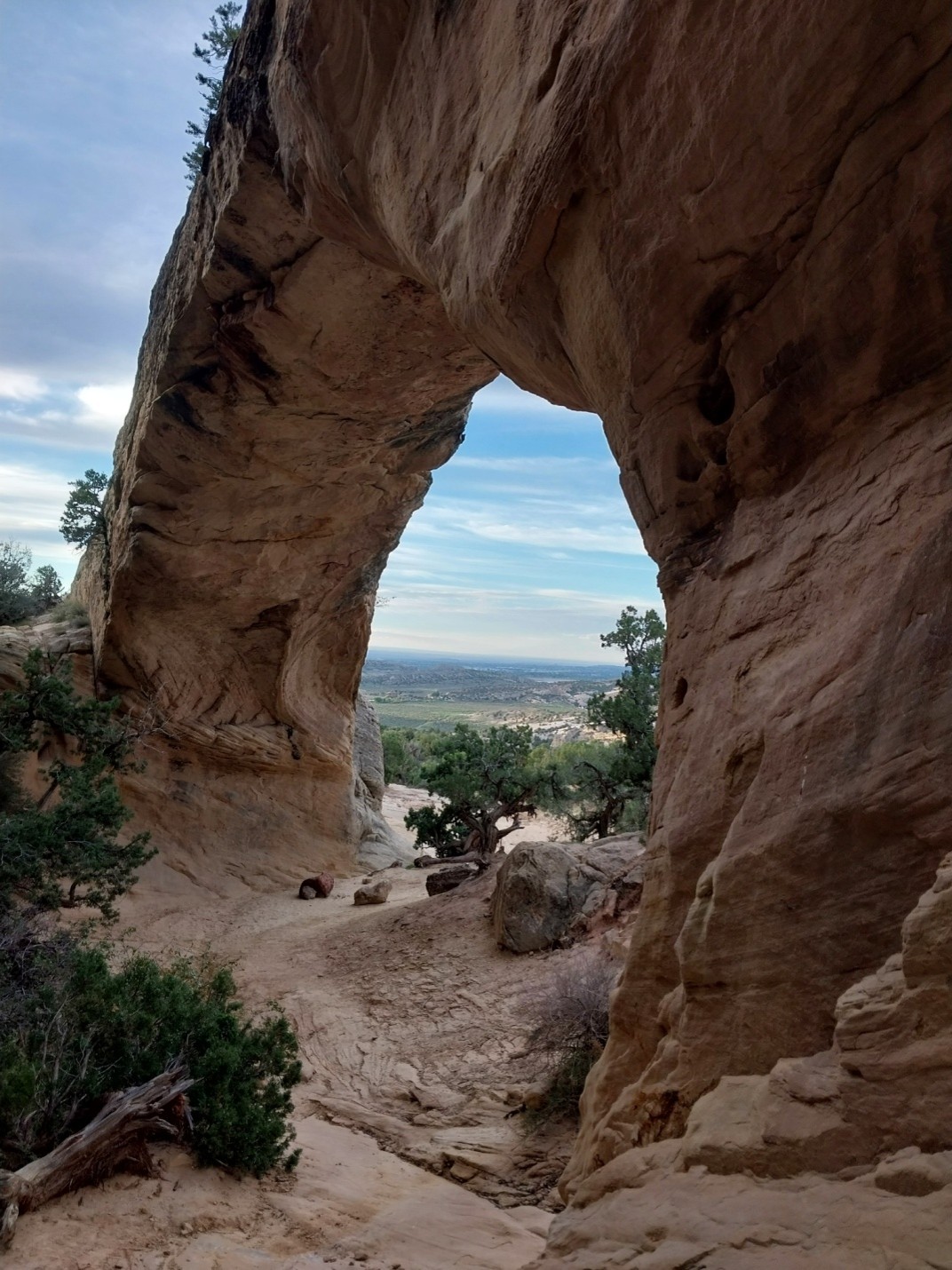
Moonshine Arch
8. Check out additional hikes in the area.
We did the 1.5-mile roundtrip Moonshine Arch which is between Vernal and Red Fleet State Park in the early morning before we hit the course.
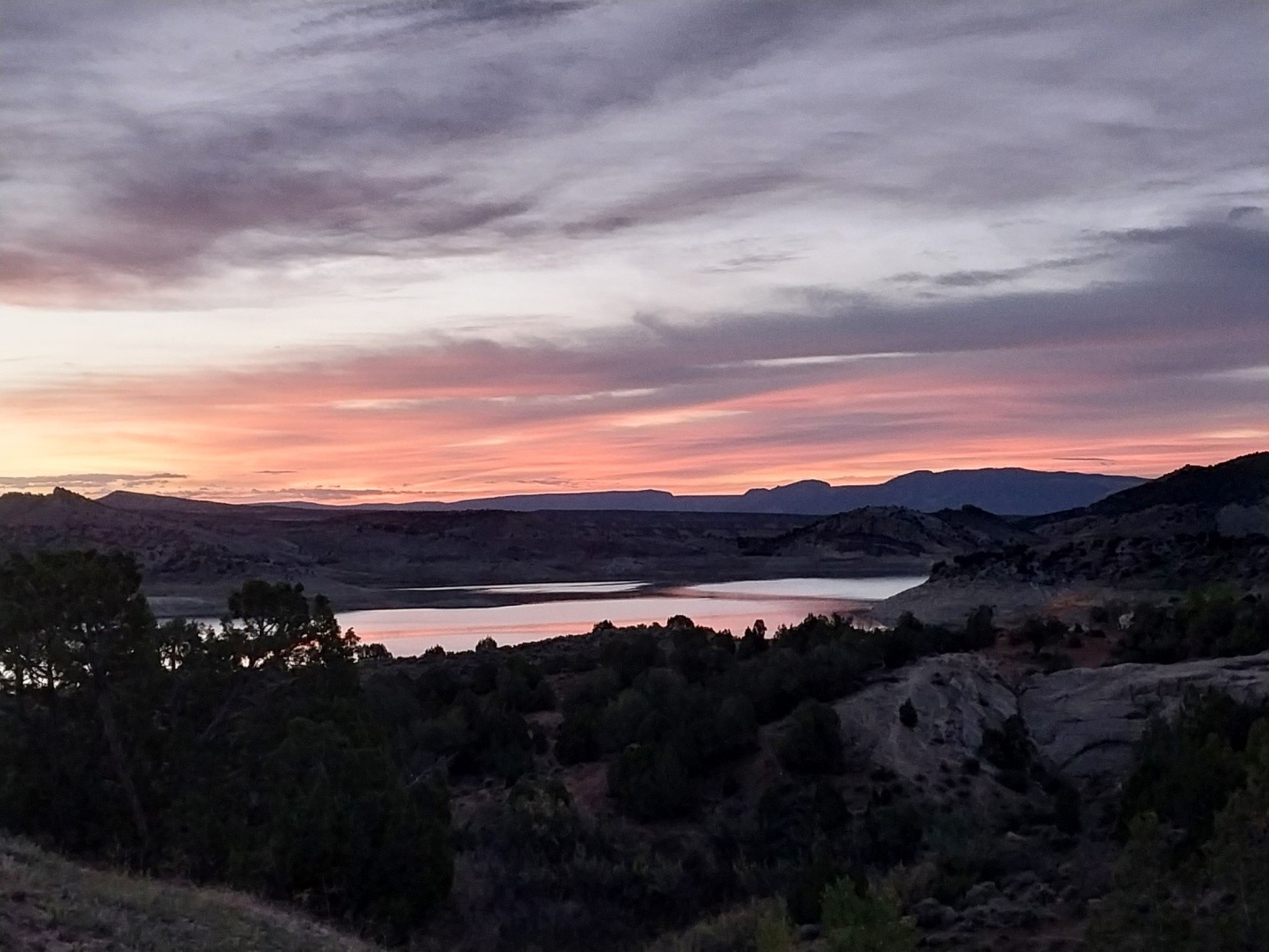
Spectacular sunrise from Campsite #8 at Red Fleet State Park
9. Stay at Red Fleet State Park.
You can stay in the local hotels in Vernal or one of the parks in the area. We opted to stay at Red Fleet State Park. It had spectacular sunrises, sunsets, and a trail to dinosaur tracks nearby. Helpful Hint: Campsite #8 is outstanding with room for a couple of tents and a front-row seat to the Red Fleet Reservoir.
10. Have fun and take lots of pictures!
If you go, tag @winehikingsociety on Facebook and Instagram. We’d love to see your experience!